· announcements · 10 min read
Four New Campaigns: Europe, the Backyard, and Two EW Squadrons
Campaign 2 is in public beta with eight scenarios. Campaigns 3, 4 and 5 are alpha builds you are welcome to explore. Here is exactly what is finished and what is not.
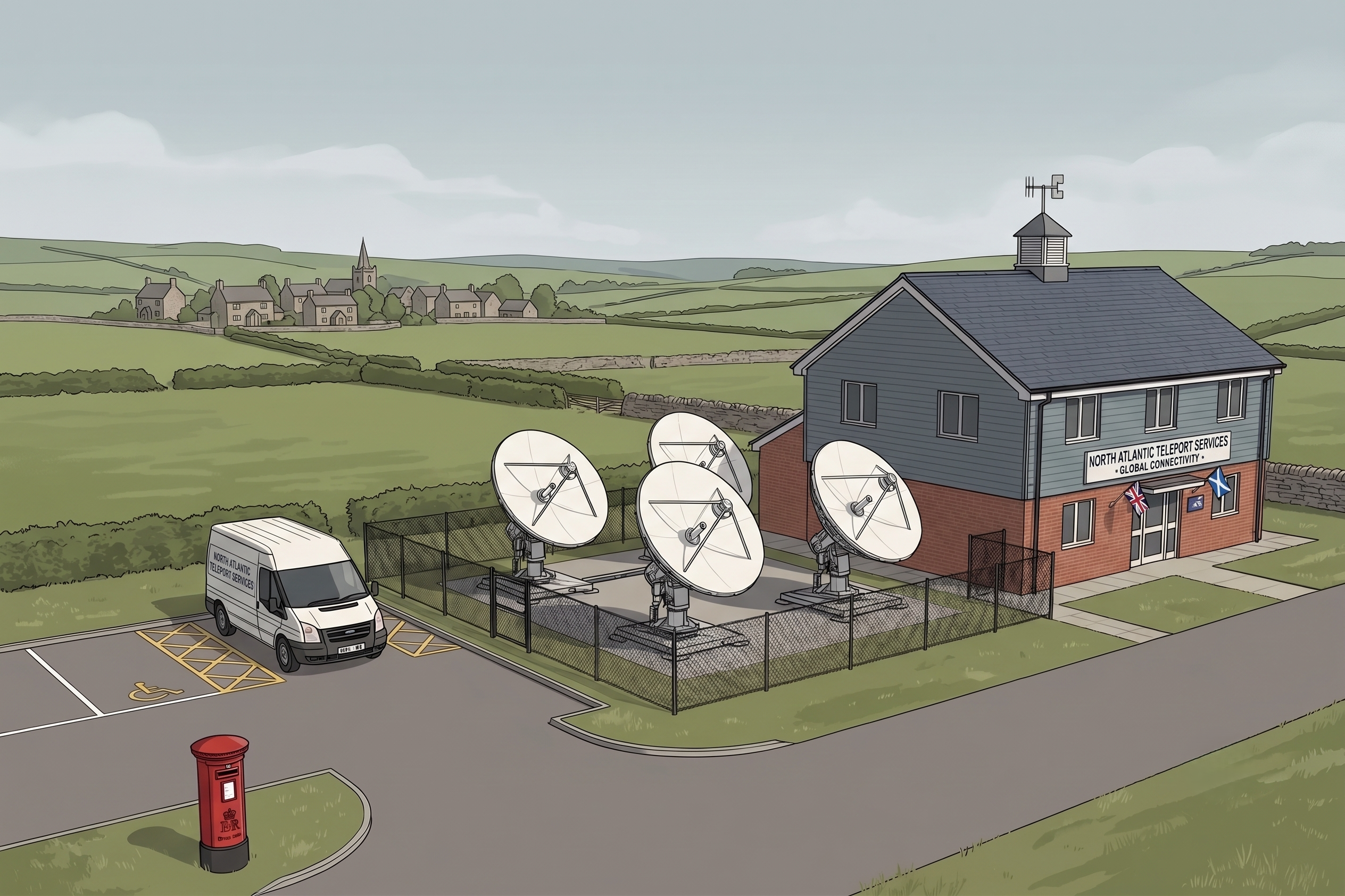
Campaign 1 stopped being the only thing to play. Four new campaigns are now live in the simulator: LEO operations in Europe, satellite tracking from a suburban backyard, and two military electronic warfare squadrons.
They are not all at the same stage, and pretending otherwise would waste your time. Campaign 2 is a public beta you can play start to finish. Campaigns 3, 4 and 5 are alpha builds - open, explorable, and unfinished. The simulator now says so on every campaign card, and this post says it here.
Where Each Campaign Actually Stands
Content-complete and playable end to end. Still under test, so you may hit errors - but saved progress is expected to carry forward.
Unlocks after Campaign 1, Scenario 8: Night Shift.
The full eight-scenario arc is playable, but the engine underneath it is still moving. Expect errors, and expect changes that invalidate saved progress.
Open to everyone - no prerequisites.
The counter-communications engine and the EA console exist and work. The scenario arc does not exist yet - what you get today is a sandbox to fly.
A preview of the mechanics, not a campaign.
The TDOA/FDOA geolocation service and its console are built. Same story as Campaign 4 - a working sandbox, no scenarios yet.
A preview of the mechanics, not a campaign.
If you want a polished run, play Campaign 1 or Campaign 2. If you want to see where the simulator is going and tell us what is wrong with it, the alphas are open.
Campaign 2: North Atlantic Teleport Services EU
Charlie Brooks left Vermont at the end of Campaign 1. He went to GW-01 Galway, NATS Europe’s LEO downlink site, and you follow him there the moment you pass the night-shift solo evaluation.
Everything you learned in Vermont assumed a satellite that sits still. None of that holds here. The birds rise, cross, and set in seven minutes. They arrive Doppler-shifted by tens of kilohertz. Their orbits change without asking you. And the station you are working is one of two.
Your first LEO pass. A satellite that rises, crosses and sets while you work it, on a four-metre Ku-band tracker that has to move to keep up.
Everything GEO let you assume about a stationary target, gone.
GW-01 is not accepted yet. Predict the carrier-to-noise ratio from the link budget, measure it during the pass, and show the two agree with margin over threshold.
Do the arithmetic before AOS - the useful part of the pass is shorter than the pass.
The station earns the other half of its licence. The bird is closing at seven kilometres a second, so your 14 GHz carrier arrives tens of kilohertz off unless you compensate.
The transmit chain will happily radiate a carrier the satellite cannot hear.
A COMSEC key rotation lands in the middle of your only pass. Until you finish it the spacecraft will not authenticate a thing you send - and a payload safe-mode command is due.
A command link anyone can use is not a command link.
SH-02 Shetland goes operational overnight and NATS Europe becomes a network rather than a station. Four contacts, two birds, two sites that can both see all four.
One antenna cannot be in two places at once. Somebody has to plan.
The monthly station security baseline. Every console action at GW-01 is logged - logins, configuration changes, command traffic - and once a month somebody actually reads it.
Charlie’s guidance: “You’ll find nothing. Find it properly.”
The constellation flew a collision-avoidance burn overnight. Your pass predictions and program-track pointing are all computed from an orbit the spacecraft is no longer in.
Until you load the new elements, the station is confidently pointing at yesterday.
00:28 local. A contact plan across two sites, a COMSEC rotation on your watch, an acceptance budget to prove, and a command that has to reach the bird inside a seven-minute window.
Qualification shift. Nobody is going to prompt you.
Campaign 3: Backyard Operator
Charlie’s niece Riley (KD2RLY) has turned the family backyard in Burlington into a ground station built from scrap: a hand-wound quadrifilar helix zip-tied to a fence post, a crossed yagi bolted to an old TV rotator, a GPS patch antenna taped to a paint stick. Total budget about eighty dollars and one weekend.
No mission control. No nine-metre dish. No shift supervisor. An SDR dongle, a waterfall, and physics.
The campaign starts gently and then the band turns hostile. Somebody spoofs your clock. Somebody hands you poisoned orbital elements. A neighbour’s failing gear buries the birds in hash. And when you finally key a transmitter of your own, you meet an unlicensed operator the satellite relays exactly as faithfully as it relays you.
Before you get the rotator, you earn the fence post. A polar weather bird rises in three minutes and spends a quarter of an hour drawing the weather one scan line at a time.
Find the signal, open the channel wide enough to swallow it, then keep your hands off.
A cubesat on the crossed yagi, and a TV rotator you drive by hand. Chase the Doppler yourself, because nothing here is going to do it for you.
Manual tracking, manual tuning, one pass to get it right.
The bird is right where it should be and you can barely hear it. Nothing is broken. You are listening with the wrong handedness, and it is costing you eighteen decibels.
Diagnose a polarization mismatch from the symptoms, not the answer key.
Earn the automatic frequency control checkbox by first proving you can do without it. Tune the pass by hand, then let the modem take over and understand exactly what it is doing for you.
Automation you understand is a tool. Automation you don’t is a liability.
GPS lives below the noise floor - all you can see is a gentle two-megahertz bump at 1575.42. You can detect it. You can never lock it. Then something in the neighbourhood starts transmitting on L1: strong, clean, and wrong.
Your clock offset walks while the satellite count stays perfect.
A tracking network hands you an element set for tonight’s pass. It is wrong, and the only way you will find out is by checking it against a sky you can actually observe.
Trust, but cross-check the elements.
A neighbour’s failing gear has raised your noise floor and a hopeless low pass is coming anyway. Audit the link budget line by line and find the decibels you did not know you had.
Find the noise. Then beat it.
Seven scenarios of listening; tonight you talk back. Pass the exam, then put five watts into the crossed yagi and chase the strangest signal you will ever hear - your own voice coming back from orbit.
Campaign finale. RF is unauthenticated; a license is a promise, not a password.
Campaigns 4 and 5: The Electronic Warfare Half
These two are the earliest work in the simulator, and the honest description is that the machinery is built and the storytelling is not. Both ship today as sandboxes: every mechanic switched on, nothing scored, no arc to follow.
Campaign 4 - 9th Electronic Warfare Squadron puts you at a deployed counter-communications site working SATCOM denial against COBALT-4, an adversary X-band bird that now flies on real propagated ephemeris rather than invented pointing angles. The EA console handles jam assessment, look-through monitoring on a second antenna, and the discipline of denying a link without destroying one.
Campaign 5 - 22nd Electronic Warfare Squadron is the mirror image: somebody is jamming allied satellites and you have to find them. The Signal Hunter console implements a two-satellite TDOA/FDOA cross-fix - an uplink jammer leaks into a neighbouring satellite’s sidelobes, and correlating the two downlinks draws crossing lines of position over the emitter.
Play them to see where the simulator is heading. Do not expect a campaign yet.
What’s New Under the Hood
Four campaigns in this range demanded engine work that Campaign 1 never needed.
The shell changes shape per campaign. Mission Control used to wear one look for everybody - a commercial teleport wordmark and layout, even when the station was a backyard. It now has four chrome variants: the commercial look for Campaigns 1 and 2, a consumer SDR application for Campaign 3, and a Space Force console after the Astro design system for Campaigns 4 and 5. Two campaigns can read as the same system without being the same campaign.
- Fast-forward to the next contact. LEO scenarios put long stretches of dead sky between the shift starting and the pass the mission is about. An opt-in skip finds the next AOS and stops short of it, so acquisition is still flown by hand. Every elapsed-time mechanic now runs on a mission clock, so skipped time counts as time on shift.
- Pass planning and ephemeris. A contact timeline driven by real propagated passes, a ground-track view with coverage footprints and the day/night terminator, and an ephemeris panel that tells you when your elements have gone stale.
- Terrestrial emitters. Interference no longer has to arrive through a transponder. Ground-based emitters are heard directly by station antennas through bearing and pattern - which is what makes a spoofed GPS signal or a noisy neighbour possible at all.
- A real transmit path for small stations. Fixed-gain antennas get a genuine uplink budget, and an amplifier can be a five-watt brick instead of a two-kilowatt cabinet.
- COMSEC, audit logs and access control for the command-link scenarios, and circular polarization that finally survives a transponder round trip (it did not, and that bug affected every campaign).
The Cast Grows
- Charlie Brooks - your Campaign 1 instructor, now at GW-01 Galway and still characteristically brief.
- Anneke Visser - MERIDIAN constellation ops in Rotterdam. She needs commands on the bird, and she needs them this pass.
- Fiona MacLeod - ran acceptance at SH-02 Shetland for three weeks in weather you would not believe. Now your second site.
- Riley (KD2RLY) - Charlie’s niece, eighteen, and a better RF troubleshooter than most people with a badge.
What’s Next
Public Beta - Campaign 2: NATS Europe
Eight scenarios, content-complete and playable end to end. We are hunting bugs and tuning balance before calling it done. Scenarios 9-16 are planned.
Alpha - Campaign 3: Backyard Operator
The full arc is playable while the engine underneath it settles. Mission briefs are written; audio and polish are not.
Alpha - Campaigns 4 and 5: Electronic Warfare
Sandboxes today. The scenario arcs for SATCOM denial and jammer geolocation are the next things we write.
Free, Open Source, Accessible
SignalRange runs in your browser with no downloads and no fees. No sign-up required to try it out - just jump in and start learning. Create a free account when you’re ready to track your progress, which is also what unlocks Campaign 2 once you clear the Campaign 1 night shift.
The code is on GitHub under the AGPL v3 license - improvements benefit the entire community.
Tell Us What Breaks
A beta is only as good as the reports it draws, and an alpha is worse than useless without them. The things we most want to hear:
- Did a scenario stall? An objective that refuses to complete is a bug, every time. Tell us which one and what you had just done.
- Did a reading look impossible? If a number on the console does not match the physics you know, we would rather hear it from you than ship it.
- Did the alpha campaigns waste your time? They are open precisely so you can tell us that. Which mechanic felt unfinished, and which one felt ready?
- Does the difficulty curve break anywhere? Campaign 2 assumes everything Campaign 1 taught you. If it assumed too much, say where.
Use the contact form - it now has fields for the campaign, scenario and build version, which makes a report far easier to act on. The Discord is faster if you want a conversation, and reproducible bugs are welcome as issues on GitHub.
Four Campaigns Are Waiting
Follow Charlie to Galway, learn RF from a backyard fence post, or go look at where the electronic warfare half is heading. Then tell us what to fix.

Theodore Kruczek